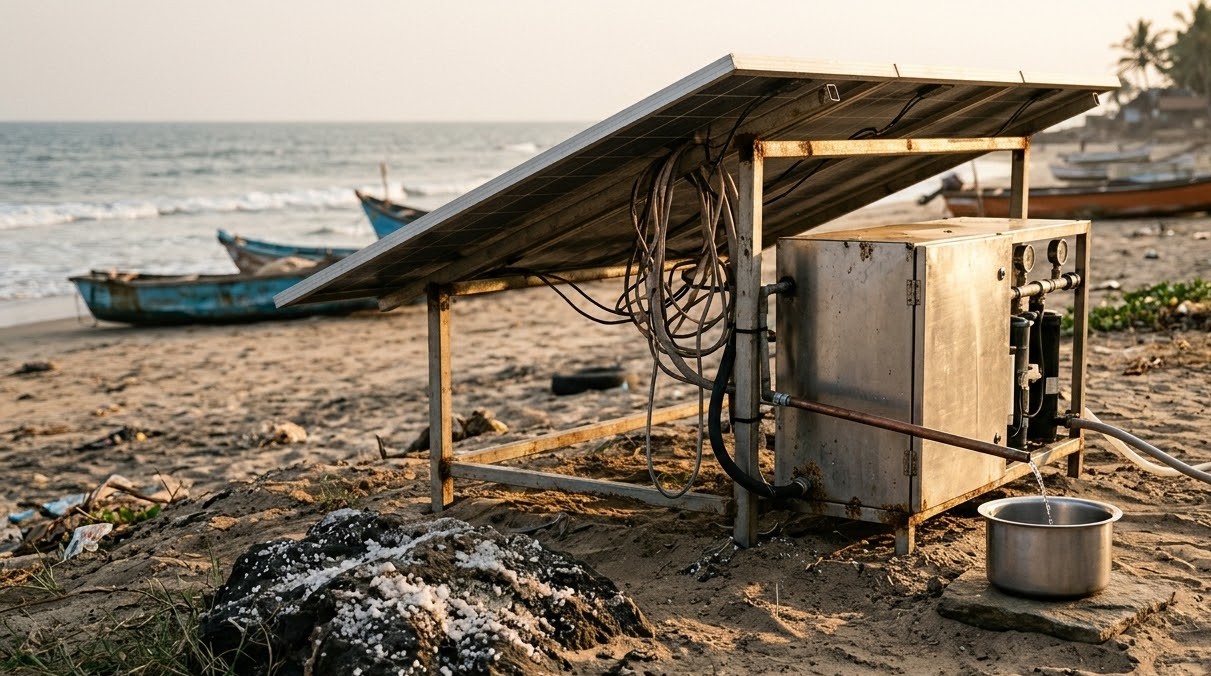
Water and climate grants are open right now, and two of them close within weeks. This roundup covers three calls I checked on each funder’s official page this week. However, each one suits a different kind of organisation, so read the eligibility lines first.
As always, the funder sets the rules and the dates. Please confirm every detail on the official page before you apply.
1. India Pitch-Pilot-Scale Start-up Challenge (AMRUT 2.0)
The Ministry of Housing and Urban Affairs (MoHUA) runs this challenge with MyGov. Its focus is start-up solutions to urban water problems. This year, the scope also covers urban air quality and energy use in municipal services. Street lighting, climate resilience and heat are in too.
- Who can apply: Start-ups recognised by DPIIT. The solution must fit one of the listed thematic areas or problem statements.
- What you get: Selected start-ups can get a grant of up to ₹20 lakh. It comes in three tranches of ₹5 lakh, ₹7 lakh and ₹8 lakh against milestones. The ministry also lists mentorship and help with scaling through urban local bodies.
- Key dates: The call runs from 10 November to 15 December 2026.
- How to apply: Register on Innovate India and upload your proposal. If you address a listed problem statement, quote its ID.
- Official link: innovateindia.mygov.in/ipps-startup
In my view, this is one of the more practical water and climate grants for start-ups in India. The problem statements come from real cities, so you can match your pilot to a stated need.
2. FAO Award for Innovation 2027
The Food and Agriculture Organization of the United Nations (FAO) runs this award. It recognises innovation in areas under its mandate. For example, that includes food security, nutrition and sustainable use of natural resources.
- Who can apply: FAO describes the award as open to a broad range of awardees, including Members and non-state partners. Applicants must be 18 or older. Importantly, every application must come from, or carry an endorsement from, an FAO Representative or an FAO Director.
- What you get: A scroll describing the achievement and a cash prize of USD 10,000.
- Key dates: Submit by 31 December 2026.
- How to apply: Fill in the nomination form on the FAO site, or email it to the address given there. Attach the FAO endorsement.
- Official link: fao.org/fao-awards/innovation/apply-now
Because the endorsement step takes time, start early. Also, the form asks how you would spend the prize money, so plan that answer before you write.
3. IKI Medium Grants 2026 (Germany)
The International Climate Initiative (IKI) of the German environment ministry funds climate and biodiversity projects in developing and emerging economies. Now it has opened the seventh round of its Medium Grants.
- Who can apply: Non-profit civil society organisations, academic institutions and non-profit companies. The lead applicant must have a permanent establishment in Germany by the first payment. It must partner with one or two local implementing organisations in the project country. So an Indian NGO can take part as a local partner. Country eligibility: not published on the main page — check the official funding announcement.
- What you get: Between EUR 300,000 and EUR 800,000 per project, for two to three years.
- Themes this year: Green skills for local climate action, and digital and practical solutions for coastal and marine ecosystems.
- Key dates: The ideas competition closes on 12 January 2027 at 11:59 am CET.
- How to apply: Submit a project outline through the IKI site. Shortlisted applicants then submit a full proposal.
- Official link: IKI Medium Grants 2026
If your NGO works on green skills or coasts, this is the time to talk to German partners. A strong local partner can make the outline far more credible.
How to choose the right water and climate grants
First, check the legal form each call needs. The AMRUT challenge needs a DPIIT-recognised start-up. The IKI call needs a German lead partner. The FAO award needs an FAO endorsement. Therefore, these three calls rarely compete for the same applicant.
Next, match the size of the money to your stage. A ₹20 lakh milestone grant suits a pilot. On the other hand, a EUR 300,000 project needs a team that can run a multi-year programme.
Then, count backwards from the deadline. Endorsements, partner letters and budgets always take longer than writing. As a rule, keep at least a week for review.
Finally, write for the reviewer. For instance, use the funder’s own words for the problem. Then show one clear result you can measure. Also, explain how the work continues after the grant ends.
What to prepare this week
Before you open any form, collect these basics in one folder:
- Registration documents and your latest audited accounts.
- A one-page summary of the project, with one clear number on reach or results.
- A simple budget with each major cost explained.
- Letters from partners, if the call needs them.
- Two or three photos of your work in the field.
With this folder ready, each new application takes hours instead of weeks. If your work also depends on company CSR budgets, my ebook CSR Funding in India: The Essentials explains how CSR law works and how to position a project. You can also browse more roundups on the blog.
Key takeaways on water and climate grants
- Three water and climate grants are open now. They close on 15 December 2026, 31 December 2026 and 12 January 2027.
- The AMRUT 2.0 challenge offers up to ₹20 lakh to DPIIT start-ups, paid against milestones.
- The FAO award offers USD 10,000 but needs an FAO endorsement.
- IKI Medium Grants fund EUR 300,000 to 800,000 projects led by Germany-based organisations with local partners.
Disclaimer: each funder sets its own eligibility, amounts and deadlines, and these can change. Always confirm on the official page before applying. This post is information, not a promise of funding.
Sources:
- MoHUA and MyGov, India Pitch-Pilot-Scale Start-up Challenge, AMRUT 2.0: https://innovateindia.mygov.in/ipps-startup/
- FAO, Apply now for the 2027 Innovation Award: https://www.fao.org/fao-awards/innovation/apply-now/en
- International Climate Initiative, IKI Medium Grants 2026: https://www.international-climate-initiative.com/en/find-funding/medium-grants/medium-grants-2026/