Meghalaya industrial development is picking up speed, and the Northeast is industrialising quickly. So the cheapest moment to get its environmental framework right is now, before the smokestacks multiply.
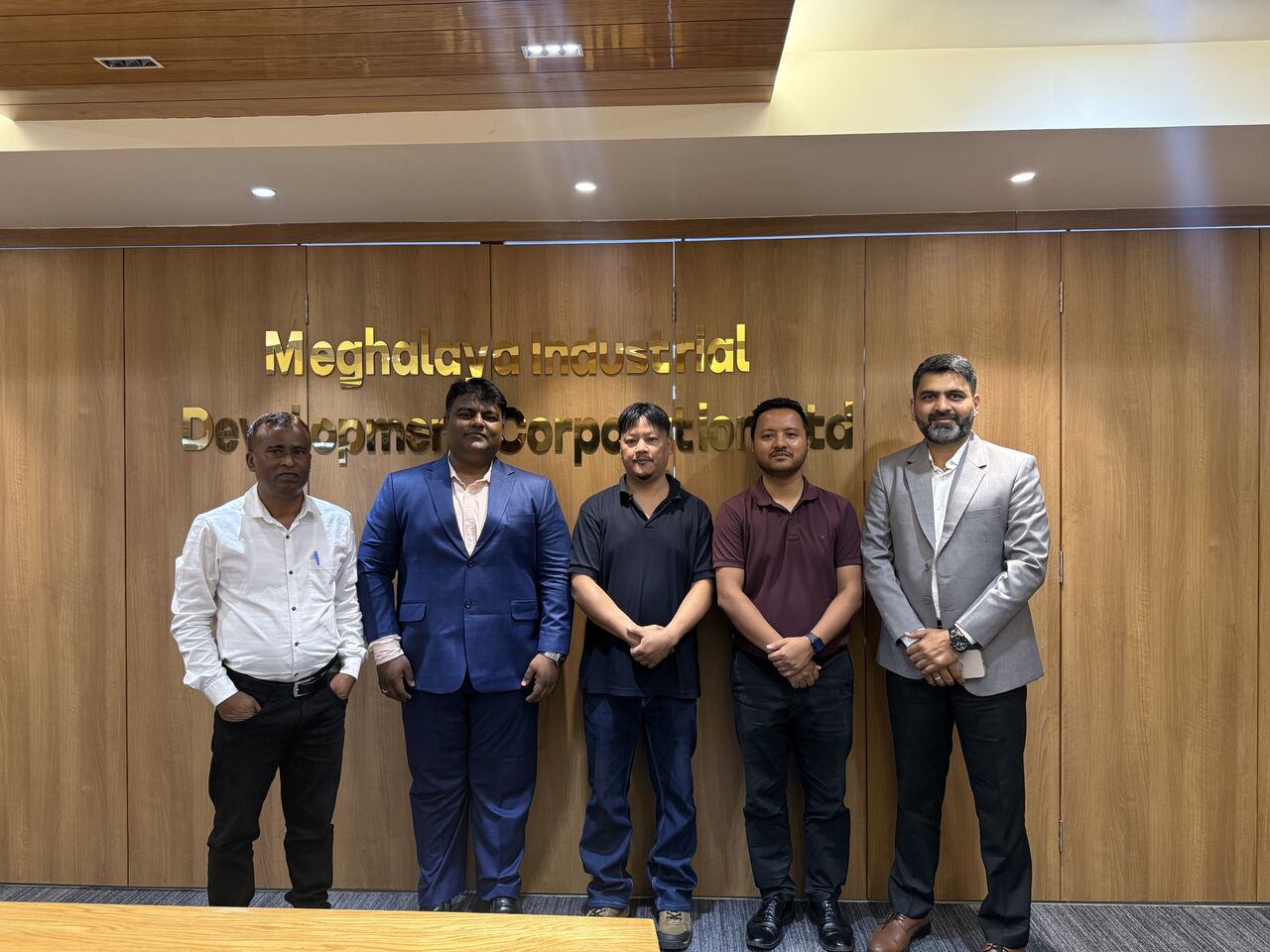
In August, I sat down at the Meghalaya Industrial Development Corporation with Kerlang Malngiang, who facilitated the discussion. Syed Sameer and Sabed Bhuyan joined us. We talked about one question. How should a fast-growing industrial region manage waste and air pollution, so that growth does not cost people the air they breathe?
What we discussed
Most of our talk drew on Stree Sanman’s work with industrial units in Maharashtra’s MIDC areas. There, the problem is familiar. Boiler and furnace stacks release particulate matter (PM). Process and canteen waste is often burnt in the open. As a result, the air in many industrial estates regularly crosses safe limits.
The units that improve fastest treat pollution where it starts. In other words, they do not wait to clean the air after it has spread.
Why this matters for Meghalaya industrial development
That lesson matters even more for Meghalaya and the wider Northeast, because its industrial hubs are still taking shape. Adding controls to a crowded estate later is slow and expensive. By contrast, designing them in from the beginning costs far less.
Three ideas I would build in from day one
- Control emissions at source. Filtering flue gas at the stack, with systems such as ECOFILT, stops most particulate matter before it reaches the surrounding air.
- Treat waste on site. Open burning is a big hidden source of local PM. Smokeless, electrically heated incinerators such as INCECO let campuses and estates dispose of non-recyclable waste safely. That way, waste is not trucked away or burnt in the open.
- Clean and measure the ambient air. Ambient purifiers such as eTree can sit at junctions, gates and loading areas. Combined with regular PM monitoring, they show whether the measures actually work.
Why a framework, not a product
No single machine fixes air quality. Instead, what works is a framework. It needs clear standards for new units and on-site waste treatment as the default. It also needs measurement that everyone can see, and a way to repeat the same model from one estate to the next.
When partners agree on these pieces at the start, compliance becomes part of how an industrial area runs. It is no longer a cost added later.
As Kerlang put it, building the right environmental framework from the start “is not optional”. I agree. For the Northeast, sustainable industrial development is not a slogan. It is the only kind of growth that will last.
What comes next
I am grateful to Kerlang Malngiang for an engaging and practical discussion. I look forward to working with partners across Meghalaya and the Northeast on solutions that work on the ground.
Are you planning an industrial estate, a campus or a municipal project in the region? If you want to talk about waste or air quality, get in touch. You can also read more about Stree Sanman’s work.
Originally shared on LinkedIn.