Tag: Net Zero

  • Indian Carbon Market: Who Has Registered, State by State

    Indian Carbon Market: Who Has Registered, State by State

    The Indian carbon market is no longer just a policy on paper. Its official registry now shows 243 compliance registrations and 84 offset registrations. In this post, I look at where those registrations sit, state by state, and what the pattern tells us.

    What the Indian carbon market registry shows

    The Bureau of Energy Efficiency (BEE) runs the Indian Carbon Market portal. When I checked it on 20 November 2026, the home page listed 243 compliance registrations and 84 offset registrations. Behind those totals, there is also a state-wise map.

    I added up the map data myself. Two states, Andhra Pradesh and Chhattisgarh, appear under two state codes each, so I combined them. As a result, the state numbers match the national totals exactly.

    A quick thanks here to Greenated Clima Tech. Their infographic on this topic prompted me to dig into the registry data.

    How the Indian carbon market works

    First, a short refresher. The government notified the Carbon Credit Trading Scheme (CCTS) in 2023. In short, it sets the framework for the Indian carbon market.

    The scheme runs on two tracks, as per the Ministry of Environment’s January 2026 release:

    • Compliance mechanism. Emission-intensive industries, called obligated entities, must meet greenhouse gas emission intensity targets. Those that beat their targets can earn Carbon Credit Certificates. Then they can sell them to entities that fall short.
    • Offset mechanism. This is the voluntary track. Here, other entities can register projects that cut or avoid emissions.

    So the compliance numbers tell us about heavy industry. The offset numbers, on the other hand, tell us who is building projects by choice.

    Where compliance registrations sit

    Compliance registrations follow India’s industrial map. Here are the top five states on the registry:

    • Gujarat: 29
    • Andhra Pradesh: 27
    • Tamil Nadu: 25
    • Rajasthan: 21
    • Karnataka: 17

    Next come Maharashtra and Telangana with 14 each. Odisha and Madhya Pradesh follow with 13 each. Together, the top five account for 119 of the 243 compliance registrations, close to half.

    In fact, this makes sense. The first sectors under targets were aluminium, cement, chlor-alkali, and pulp and paper. Later, refineries, petrochemicals, textiles and secondary aluminium joined. Naturally, these plants cluster in a handful of states.

    Where offset registrations sit

    The offset picture looks different. Here, Uttar Pradesh and Maharashtra lead with 10 each. Tamil Nadu has 8 and Delhi has 7. Rajasthan and Bihar have 6 each.

    Delhi is the clearest example of the gap between the two tracks. For instance, it has zero compliance registrations but 7 offset registrations. In other words, project developers and service firms can sit far from the factories.

    Meanwhile, Telangana shows the opposite. It has 14 compliance registrations and no offset registrations yet.

    Why the Indian carbon market data matters

    Now compare two numbers. The government says the compliance mechanism covers 490 obligated entities after the January 2026 notification. By contrast, the registry shows 243 compliance registrations today.

    I would not read too much into that gap. Registrations and notified entities are not always the same unit, and timelines vary by sector. Still, it suggests the registry is still filling up.

    For the offset side, 84 registrations is a modest start for a country this size. However, that is also an opening. After all, many states have zero or one offset registration. Credible projects in clean energy, waste and agriculture could change that.

    How to read the registry yourself

    The portal is public, and you do not need a login to see the totals. Open the home page and scroll to the map. Then hover over a state to see its counts.

    Keep two things in mind. First, the numbers change as new entities register, so note the date you checked. Second, some states appear under more than one code, as I found with Andhra Pradesh and Chhattisgarh. So add them up before you compare states.

    What this means for you

    Of course, not everyone needs to trade carbon credits. Even so, the shift affects many people.

    • If you work in a heavy industry, your plant may now have an emissions intensity target. Ask your team how it plans to meet it.
    • If you run a sustainability project, read how the offset mechanism works before you promise anyone carbon credits.
    • If you are a student or job seeker, carbon accounting and verification are fast-growing skills.
    • If you advise NGOs, be careful. A project only earns credits through the official process, not through good intentions.

    You can also start with yourself. My free SQ Test is a self-assessment of how sustainability shows up in your choices. It is not a rating, but it is a useful first mirror.

    Indian carbon market registry by state: 243 compliance and 84 offset registrations, top 10 states led by Gujarat, Tamil Nadu and Andhra Pradesh
    Chart: Anand Nikam, data from indiancarbonmarket.gov.in (BEE), accessed 20 Nov 2026

    Key takeaways on the Indian carbon market

    • The Indian carbon market registry lists 243 compliance and 84 offset registrations as of 20 November 2026.
    • Gujarat, Andhra Pradesh and Tamil Nadu lead on compliance registrations.
    • Uttar Pradesh and Maharashtra lead on offset registrations, and Delhi shows offsets without compliance.
    • The government has notified targets for 490 obligated entities, so the registry is likely to keep growing.
    • Always check the official portal, because the numbers change as new entities register.

    For more on climate policy and practice, browse the blog.

    Sources:

  • Hydrogen Train India: What the Jind Line Teaches

    Hydrogen Train India: What the Jind Line Teaches

    India’s first hydrogen train began its run on the Jind–Sonipat line in Haryana four months ago. For anyone tracking the hydrogen train India story, now is a good moment to look past the headlines. What does this train actually do, and what can the rest of us learn from it?

    I worked on last-mile energy delivery for years, so I read rail and fuel news with one question in mind. Will it work on an ordinary weekday, for ordinary people? Here is what the official record tells us so far.

    Hydrogen train India: what it is

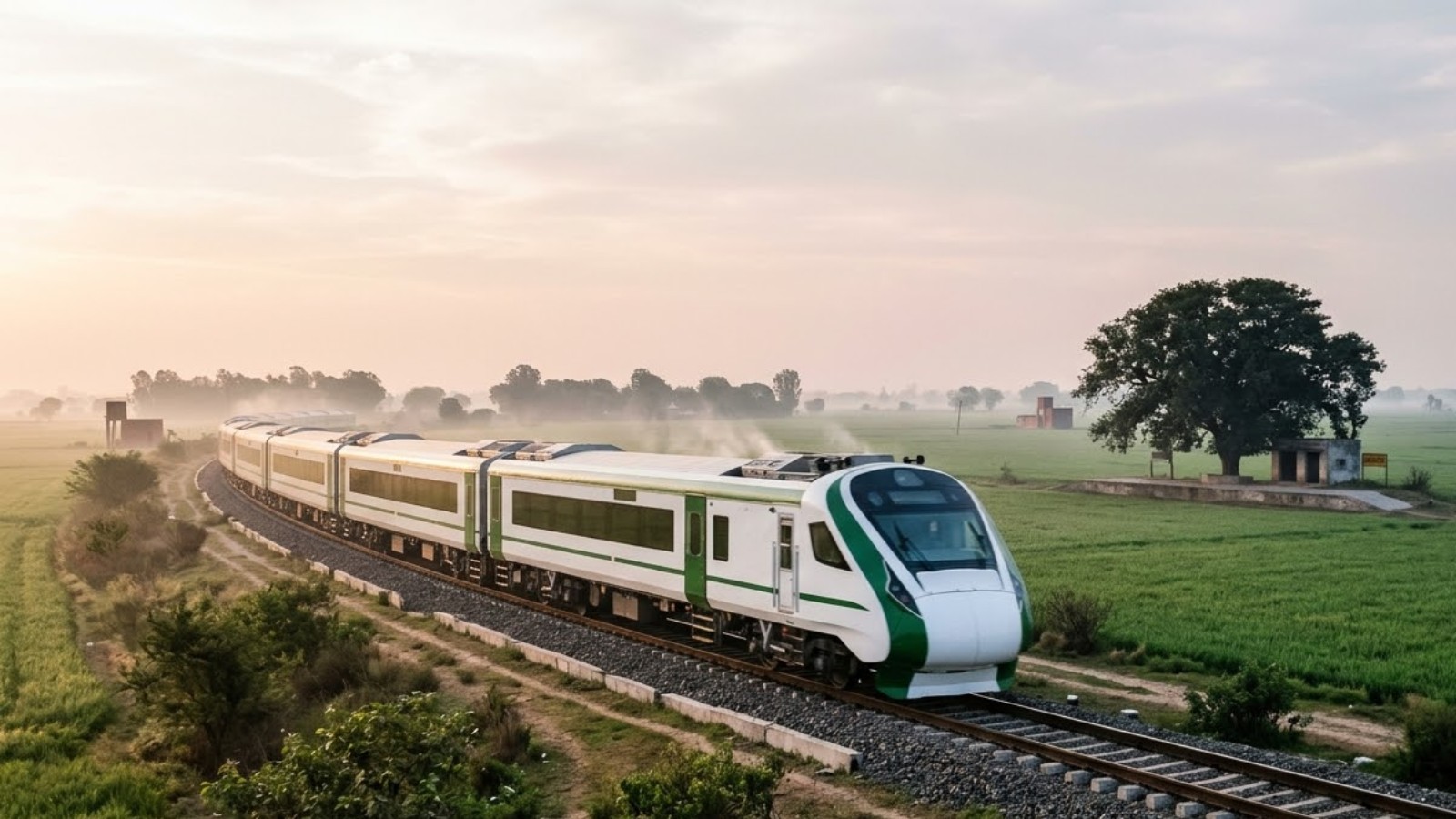
    Prime Minister Narendra Modi flagged off the train at Jind on 17 July 2026. According to the PIB backgrounder, it is a 10-car trainset. Two driving power cars carry the fuel cells, batteries and hydrogen tanks. Eight trailer coaches carry the passengers.

    The train runs on a 1,200 kW hydrogen fuel cell system. It can carry around 2,600 passengers. Its design speed is 110 kmph, but the approved top speed on this line is 75 kmph. As reported by Telangana Today, PTI put the route at 89 km. The trip takes about two hours, with 12 stops.

    PIB also stresses that Indian teams designed and developed the train, from the first drawings to the prototype. RDSO, the Railways’ standards body, prepared the design approval and the technical specifications.

    How India’s hydrogen train works

    The idea is simple, even if the engineering is not. A fuel cell mixes hydrogen with oxygen from the air. That reaction makes electricity, and the electricity drives the motors. The only by-products are water vapour and heat.

    The fuel cells here are the proton exchange membrane type. Lithium iron phosphate batteries sit beside them. In simple terms, the batteries give a burst of power when needed. They store energy when it is not. So the fuel cells can work at a steadier pace.

    Fuel comes from a refuelling site at Jind. PIB calls it the country’s largest railway hydrogen storage and refuelling facility. It can hold nearly 3,000 kg of hydrogen at a time. PESO, the national explosives safety body, has licensed it. TÜV SÜD of Germany carried out an independent safety check. In addition, the site has leak and flame detectors and an automatic hydrogen cut-off.

    • Power: 1,200 kW fuel cell system with LFP batteries
    • Size: 10 cars, about 2,600 passengers
    • Speed: 75 kmph approved, 110 kmph design
    • Fuel store: nearly 3,000 kg of hydrogen at Jind

    Why the hydrogen train matters for India

    First, it proves that Indian teams can design, certify and run a hydrogen trainset. Only a small group of countries do this today. PIB names Germany, Japan, China and the United States.

    Second, it gives early field data. News On AIR reported on 25 July 2026 that the train had run more than 1,200 km. It said this replaced more than 3,000 litres of diesel. Small numbers, yes. But real kilometres teach more than any slide deck.

    Third, it links rail to the National Green Hydrogen Mission. A train is a steady, predictable buyer of fuel. That kind of demand can help a local hydrogen supply chain grow. Many lines in India still run diesel trains on short, quiet routes. Those are the routes where a hydrogen train India builds at home could matter most.

    Finally, it builds skills. Safety codes, licences, refuelling drills and maintenance routines now exist on paper and in practice. The maintenance base is at Shakurbasti in Delhi. Every future project can build on that groundwork.

    Limits and open questions

    Hydrogen is only as clean as the way we make it. The official backgrounder does not say how much of the fuel comes from renewable power. That one detail decides the real climate benefit.

    Cost is the next question. No public figure covers the cost per km against diesel or electric trains. Without it, nobody outside the system can judge value for money. On busy lines, overhead electric traction is still the simpler choice. Hydrogen makes more sense where wiring a line does not pay.

    Then there is daily life. At launch, PTI reported that the date for regular commercial service was still awaited. Passengers also raised small issues, like stains from seat covers, and officials said they would fix them. These details sound minor. Yet they decide whether people choose the train again.

    Lastly, one line is a pilot, not a fleet. The real test is the next five lines. Officials have said trials on a Delhi route will begin soon.

    What we can learn from it

    Whether you run an NGO, a start-up or a CSR team, the Jind line holds a lesson. New technology needs boring things to succeed. It needs safety approvals, a trained crew, a fuel plan and honest data.

    So when you pitch a clean-tech pilot, plan for those boring things first. Show your licences, your maintenance plan and how you will measure results. That is what makes a pilot worth funding. You can read about my own work on the about page. Or check your own habits with the free SQ Test.

    Key takeaways

    • The hydrogen train India flagged off on 17 July 2026 runs 89 km between Jind and Sonipat.
    • It uses a 1,200 kW fuel cell system and emits only water vapour and heat.
    • Early runs passed 1,200 km and replaced over 3,000 litres of diesel.
    • Open questions remain on green hydrogen supply, cost per km and regular service.

    Which route in your state would you test a hydrogen train on, and why? More posts like this are on my blog.

    Sources:
    PIB Backgrounder, “India’s First Hydrogen-Powered Train: Advancing Green Rail Mobility”, 16 July 2026: pib.gov.in (PRID 2285268)
    Telangana Today (PTI), “PM Modi flags off India’s first hydrogen-powered train from Haryana’s Jind”, 17 July 2026: telanganatoday.com
    Telangana Today (PTI), “Commercial run of India’s first hydrogen train to begin soon”, 17 July 2026: telanganatoday.com
    News On AIR, “India’s first hydrogen-powered train completes over 1,200 km of successful operations”, 25 July 2026: newsonair.gov.in