Tag: Climate Tech

  • Electric Three-Wheelers: What India’s Earthshot Win Shows

    Electric Three-Wheelers: What India’s Earthshot Win Shows

    Electric three-wheelers just put India on the global climate stage. On 17 November 2026, Mahindra Last Mile Mobility won the Earthshot Prize for “Clean our Air”. The awards night took place in Mumbai. The prize carries £1 million. But the bigger story is the humble rickshaw itself, and what its quiet switch to electric can teach us.

    What it is: electric three-wheelers built for daily work

    The winner makes electric rickshaws and small cargo vehicles for short city trips. These are the vehicles that carry school children, vegetables and parcels across Indian towns. According to its Earthshot profile, the company has sold more than 400,000 electric last-mile vehicles. Over 100,000 of them were sold in a single year.

    The other winners were Bhutan, the Niue Ocean Wide Trust, the PFAS-Free France campaign and the offshore wind company Ørsted. Each also receives £1 million, as the official Earthshot announcement confirms. In other words, an Indian street vehicle now stands beside forests, oceans and offshore wind.

    How it works on the street

    The idea is simple. A battery and an electric motor replace the petrol, diesel or CNG engine. Drivers charge overnight or at public points. As a result, there is no exhaust pipe on the street.

    The Earthshot profile says the company has over 900 sales and service outlets. It also says drivers can reach more than 10,000 public charging points. In addition, the company reports that it has trained 500 women to drive and repair these vehicles.

    Running costs matter most to drivers. The profile claims that take-home income can rise by 25 to 30 per cent because running costs fall. Independent work points the same way. For example, a 2025 CEEW study put the total cost of an electric three-wheeler at INR 1.28 per km. By contrast, it put a petrol one at INR 3.21 per km.

    Why electric three-wheelers matter for India

    India is already the world’s largest market for this vehicle. The IEA Global EV Outlook 2026 says over two-thirds of India’s three-wheeler sales in 2025 were electric. Sales also rose 15 per cent to almost 800,000 units that year.

    Policy helped too. The Union Cabinet approved the PM E-DRIVE scheme in September 2024. Its support for larger electric autos ended on 26 December 2025. By then, that part had met its target, as the government factsheet notes. Meanwhile, support for e-rickshaws and e-carts continues until March 2028.

    Clean air is the bigger gain. Three-wheelers run all day in crowded streets. So every electric one cuts exhaust right where people walk, shop and wait. NITI Aayog has also made this point. Because so many of them serve as shared transport, electric three-wheelers offer bigger gains in cleaner air and lower fuel imports.

    What can others learn from this? First, start where demand already exists. Lower running costs give drivers a clear reason to switch. Second, build service before you chase sales. A vehicle that breaks down far from a workshop loses trust fast. Third, train people, not just sell products. The 500 women trained to drive and repair are a reminder that skills travel further than machines.

    Jobs matter as well. A rickshaw is not just a vehicle. For many families, it is the main source of daily income. Therefore, a cheaper ride to run can mean a little more money at home.

    Limits and open questions

    However, the prize does not settle every question. First, think about batteries. India’s Battery Waste Management Rules, 2022 cover EV batteries and make producers responsible for collection and recycling. The company mentions plans for battery recycling, but that work is still to scale.

    Second, think about money. Many drivers rent their vehicles or borrow at high rates. The company plans to bring banks into lower-cost driver finance. Yet the profile gives no numbers for these plans.

    Third, read the figures with care. The data on sales, emissions avoided and income come from the company’s own reporting. Even its Earthshot profile gives two different shares for electric sales in the segment. So treat them as claims, not audited results.

    Finally, the grid still runs partly on coal. The full climate benefit will grow as India adds more clean power.

    Key takeaways on electric three-wheelers

    • Electric three-wheelers won India an Earthshot Prize on 17 November 2026, worth £1 million.
    • India leads the world here, with over two-thirds of 2025 sales electric, according to the IEA.
    • Lower running costs can lift driver incomes, but finance and battery recycling still need work.
    • Company figures are useful signals, not audited proof.

    Climate solutions do not always look futuristic. Sometimes they look like the rickshaw at your gate. For more notes like this, visit my blog. You can also take the free SQ Test to see where your own habits stand.

    Sources:

  • Hydrogen Train India: What the Jind Line Teaches

    Hydrogen Train India: What the Jind Line Teaches

    India’s first hydrogen train began its run on the Jind–Sonipat line in Haryana four months ago. For anyone tracking the hydrogen train India story, now is a good moment to look past the headlines. What does this train actually do, and what can the rest of us learn from it?

    I worked on last-mile energy delivery for years, so I read rail and fuel news with one question in mind. Will it work on an ordinary weekday, for ordinary people? Here is what the official record tells us so far.

    Hydrogen train India: what it is

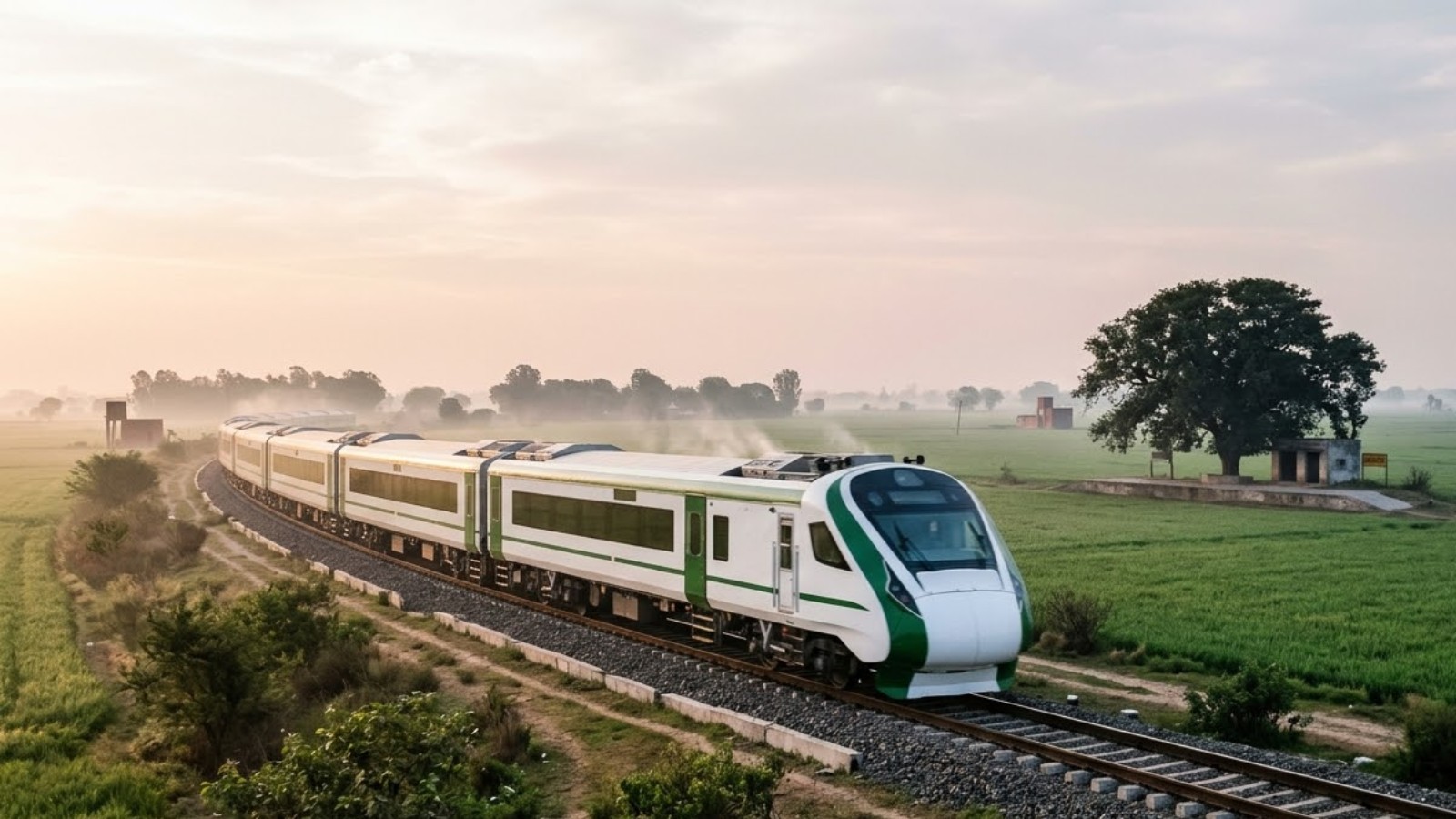
    Prime Minister Narendra Modi flagged off the train at Jind on 17 July 2026. According to the PIB backgrounder, it is a 10-car trainset. Two driving power cars carry the fuel cells, batteries and hydrogen tanks. Eight trailer coaches carry the passengers.

    The train runs on a 1,200 kW hydrogen fuel cell system. It can carry around 2,600 passengers. Its design speed is 110 kmph, but the approved top speed on this line is 75 kmph. As reported by Telangana Today, PTI put the route at 89 km. The trip takes about two hours, with 12 stops.

    PIB also stresses that Indian teams designed and developed the train, from the first drawings to the prototype. RDSO, the Railways’ standards body, prepared the design approval and the technical specifications.

    How India’s hydrogen train works

    The idea is simple, even if the engineering is not. A fuel cell mixes hydrogen with oxygen from the air. That reaction makes electricity, and the electricity drives the motors. The only by-products are water vapour and heat.

    The fuel cells here are the proton exchange membrane type. Lithium iron phosphate batteries sit beside them. In simple terms, the batteries give a burst of power when needed. They store energy when it is not. So the fuel cells can work at a steadier pace.

    Fuel comes from a refuelling site at Jind. PIB calls it the country’s largest railway hydrogen storage and refuelling facility. It can hold nearly 3,000 kg of hydrogen at a time. PESO, the national explosives safety body, has licensed it. TÜV SÜD of Germany carried out an independent safety check. In addition, the site has leak and flame detectors and an automatic hydrogen cut-off.

    • Power: 1,200 kW fuel cell system with LFP batteries
    • Size: 10 cars, about 2,600 passengers
    • Speed: 75 kmph approved, 110 kmph design
    • Fuel store: nearly 3,000 kg of hydrogen at Jind

    Why the hydrogen train matters for India

    First, it proves that Indian teams can design, certify and run a hydrogen trainset. Only a small group of countries do this today. PIB names Germany, Japan, China and the United States.

    Second, it gives early field data. News On AIR reported on 25 July 2026 that the train had run more than 1,200 km. It said this replaced more than 3,000 litres of diesel. Small numbers, yes. But real kilometres teach more than any slide deck.

    Third, it links rail to the National Green Hydrogen Mission. A train is a steady, predictable buyer of fuel. That kind of demand can help a local hydrogen supply chain grow. Many lines in India still run diesel trains on short, quiet routes. Those are the routes where a hydrogen train India builds at home could matter most.

    Finally, it builds skills. Safety codes, licences, refuelling drills and maintenance routines now exist on paper and in practice. The maintenance base is at Shakurbasti in Delhi. Every future project can build on that groundwork.

    Limits and open questions

    Hydrogen is only as clean as the way we make it. The official backgrounder does not say how much of the fuel comes from renewable power. That one detail decides the real climate benefit.

    Cost is the next question. No public figure covers the cost per km against diesel or electric trains. Without it, nobody outside the system can judge value for money. On busy lines, overhead electric traction is still the simpler choice. Hydrogen makes more sense where wiring a line does not pay.

    Then there is daily life. At launch, PTI reported that the date for regular commercial service was still awaited. Passengers also raised small issues, like stains from seat covers, and officials said they would fix them. These details sound minor. Yet they decide whether people choose the train again.

    Lastly, one line is a pilot, not a fleet. The real test is the next five lines. Officials have said trials on a Delhi route will begin soon.

    What we can learn from it

    Whether you run an NGO, a start-up or a CSR team, the Jind line holds a lesson. New technology needs boring things to succeed. It needs safety approvals, a trained crew, a fuel plan and honest data.

    So when you pitch a clean-tech pilot, plan for those boring things first. Show your licences, your maintenance plan and how you will measure results. That is what makes a pilot worth funding. You can read about my own work on the about page. Or check your own habits with the free SQ Test.

    Key takeaways

    • The hydrogen train India flagged off on 17 July 2026 runs 89 km between Jind and Sonipat.
    • It uses a 1,200 kW fuel cell system and emits only water vapour and heat.
    • Early runs passed 1,200 km and replaced over 3,000 litres of diesel.
    • Open questions remain on green hydrogen supply, cost per km and regular service.

    Which route in your state would you test a hydrogen train on, and why? More posts like this are on my blog.

    Sources:
    PIB Backgrounder, “India’s First Hydrogen-Powered Train: Advancing Green Rail Mobility”, 16 July 2026: pib.gov.in (PRID 2285268)
    Telangana Today (PTI), “PM Modi flags off India’s first hydrogen-powered train from Haryana’s Jind”, 17 July 2026: telanganatoday.com
    Telangana Today (PTI), “Commercial run of India’s first hydrogen train to begin soon”, 17 July 2026: telanganatoday.com
    News On AIR, “India’s first hydrogen-powered train completes over 1,200 km of successful operations”, 25 July 2026: newsonair.gov.in

  • Climate Innovation Funding: 3 Calls to Act On Now

    Climate Innovation Funding: 3 Calls to Act On Now

    Climate innovation funding often opens and closes before busy founders notice. This week I checked three calls that are open now, each on the funder’s own website. One closes in days, one runs into January, and one gives you until March 2027 to get in line.

    Each call suits a different kind of applicant. One is for energy and climate tech startups. Another is for social entrepreneurs at an early stage. The third is for students aged 13 to 19. Please confirm every detail on the official page before you apply, because the funder sets the rules and can change them.

    1. SET Award 2027 (dena, Germany)

    The German Energy Agency (dena) runs this global competition for energy and climate tech startups. Its terms say Germany’s Federal Ministry for Economic Affairs and Energy funds it. This is the most urgent call on the list.

    • Who can apply: national and international startups founded in August 2016 or later. The company must be registered or in the process of registration. You need more than an idea: at least a proof of concept, plus a client, a partner or a working prototype. Hardware should generally be at TRL 4 or above.
    • What you get: each category winner can receive a cash prize of up to €10,000, equity-free. dena covers finalists’ travel costs, and finalists pitch at the SET Tech Festival in Berlin.
    • Key dates: applications close on 30 November 2026 at 23:59:59 CET. Evaluations begin in early December 2026. The SET List follows in February 2027, and the finalists’ ceremony is likely in March 2027.
    • How to apply: fill in the online form linked on the official page. Write it fully in English, add a pitch deck of up to 15 slides as a PDF, and choose one of five categories.
    • Official link: SET Award 2027

    2. Echoing Green Fellowship via the Talent Platform

    Echoing Green, based in New York, backs early-stage social entrepreneurs. It has changed how people enter its Fellowship. Now only members of its free Talent Platform can apply. So the first step is to join the platform.

    • Who can apply: founders of any nationality, working in any country. Nonprofit, for-profit and hybrid models are all welcome. Your organisation does not need to be incorporated yet.
    • What you get: the official page lists seed funding as a stipend of USD 100,000 over 18 months. For-profit organisations receive it as recoverable grants.
    • Key dates: request to join the Talent Platform by 31 March 2027 to be part of the first submission period. That intake is tentatively planned for April 2027. Echoing Green also plans later windows, tentatively in July and October 2027. It will announce Fellowship selection dates in early 2027.
    • How to apply: submit the Talent Platform request form, which asks three short essay questions. Membership is free and open all year.
    • Official link: Echoing Green Talent Platform

    3. The Earth Prize 2027 (students aged 13 to 19)

    The Earth Foundation, a non-profit in Geneva, runs this environmental competition for teenagers worldwide. If your NGO or school works with young people, this is worth sharing.

    • Who can apply: students aged 13 to 19 who are in school, homeschool or another education programme. They can enter alone or in teams of up to five. Minors need a parent or guardian’s consent.
    • What you get: the 2027 edition offers more than USD 100,000 in total. Seven Regional Winners each receive USD 10,000 to put their ideas into action. Twelve Mentors of the Month each receive USD 500.
    • Key dates: registration is open until 10 January 2027, and submissions close on 31 January 2027. The site lists the awards ceremony for 28 May 2027. Time zone: not published, so check the official page.
    • How to apply: register on the official site, then build your entry in the submissions portal using the Earth Prize Blueprint format.
    • Official link: The Earth Prize 2027

    How to choose the right call

    Do not apply to everything. Instead, match the call to your stage. The SET Award wants a working product or prototype, so it suits startups with early traction. Echoing Green looks for founders with a bold idea, even before registration. Meanwhile, The Earth Prize suits young people with a fresh environmental idea.

    Next, check the deadline against your real capacity. A rushed application rarely wins. If 30 November is too close for a strong SET entry, note it for the next cycle and focus on Echoing Green instead.

    What to prepare for climate innovation funding

    Most climate innovation funding calls ask for the same core material. If you keep it ready, each new form takes hours, not weeks. Here is a simple kit:

    • A one-paragraph problem statement with one or two numbers from a credible source.
    • A clear description of your solution and its current stage.
    • Proof of progress, such as pilot results, users, partners or a prototype.
    • A short pitch deck in English, with your team and your plan for the money.
    • Registration papers and basic financials, if your organisation has them.

    Also, read the eligibility rules twice. Many good applications fail on small points, such as founding date, age or language. If you are an Indian NGO looking at CSR funding as well, my short guide CSR Funding in India: The Essentials covers how companies assess proposals.

    Key takeaways

    • SET Award 2027 closes on 30 November 2026, so climate tech startups must move fast.
    • Echoing Green now takes Fellowship applicants only through its Talent Platform, with a 31 March 2027 date for the first intake.
    • The Earth Prize 2027 gives teenagers until 10 January 2027 to register.

    Disclaimer: the funders set eligibility, amounts and deadlines, and they can change them. Always confirm on the official page before you apply. This post is information, not advice, and I have no link with these funders. For more funding round-ups, visit the blog.

    Sources